
Hindutva Politics Fueling Human Rights Violations and Repression in IIOJK: Abdul Basit

Ever since Narendra Modi took charge of India, he has styled himself as a Hindu ruler but not as an administrator. His tougher stance against the minorities, particularly the Muslims, has a career-long legacy and is often called the butcher of Gujarat. He has perfectly executed the exclusionary policies as dictated by the Rashtriya Swayamsevak, favoring the Hindus. Muslims living in India and IIOJK were already facing decades of discrimination, which experts say has worsened under the Hindu nationalist BJP’s government.
BJP leaders have often vowed to make India an exclusive Hindu Rashtra, restoring its past glory. In this quest, the BJP government, since 2014, has adopted an iron fist policy to deal with the people of IIOJK. New Delhi has now intensified the policy of collective punishment for the Kashmiris after any attack inside IIOJK or mainland India. Without investigations, individuals are labelled as perpetrators, leading to their detention and the demolition of houses across the vicinity, creating an environment of fear and hate among the locals. The recent blasts in Delhi and Nowgam, IIOJK, have become yet another pretext for New Delhi to firm its authoritarian grip, deepen its culture of impunity, and reaffirm a longstanding doctrine that Muslim identity is itself a security threat.

During the premiership of Manmohan Singh, India opted to pursue appeasement towards the Kashmiris, which led the people of Kashmir to live for a while. People considered the opportunity a blessing in disguise because the Kashmiris were tired of the Indian state-sponsored terrorism in IIOJK. The dialogue process later restored the confidence of the stakeholders, resulting in a decrease in armed resistance. However, the later on Mumbai attacks false flag, sabotaged this initiative. Narendra Modi often criticized Manmohan Singh’s appeasement policy towards the Kashmiris as the root cause of uncertainty in the valley.
The constant targeting of Muslims, particularly from IIOJK, reflects a prevailing fascist policy framework. Indian reaction to the recent blasts in Delhi and its illegally occupied Kashmir depicts a coercive and deeply embedded pattern of inflicting collective punishment on the entire Kashmir. In the days following the attacks, large-scale cordon and search operations are underway across IIOJK, with the detention of hundreds without due process. People have been wrongly accused of crimes they didn’t commit, and their properties have been devastated to inflict terror in their minds.
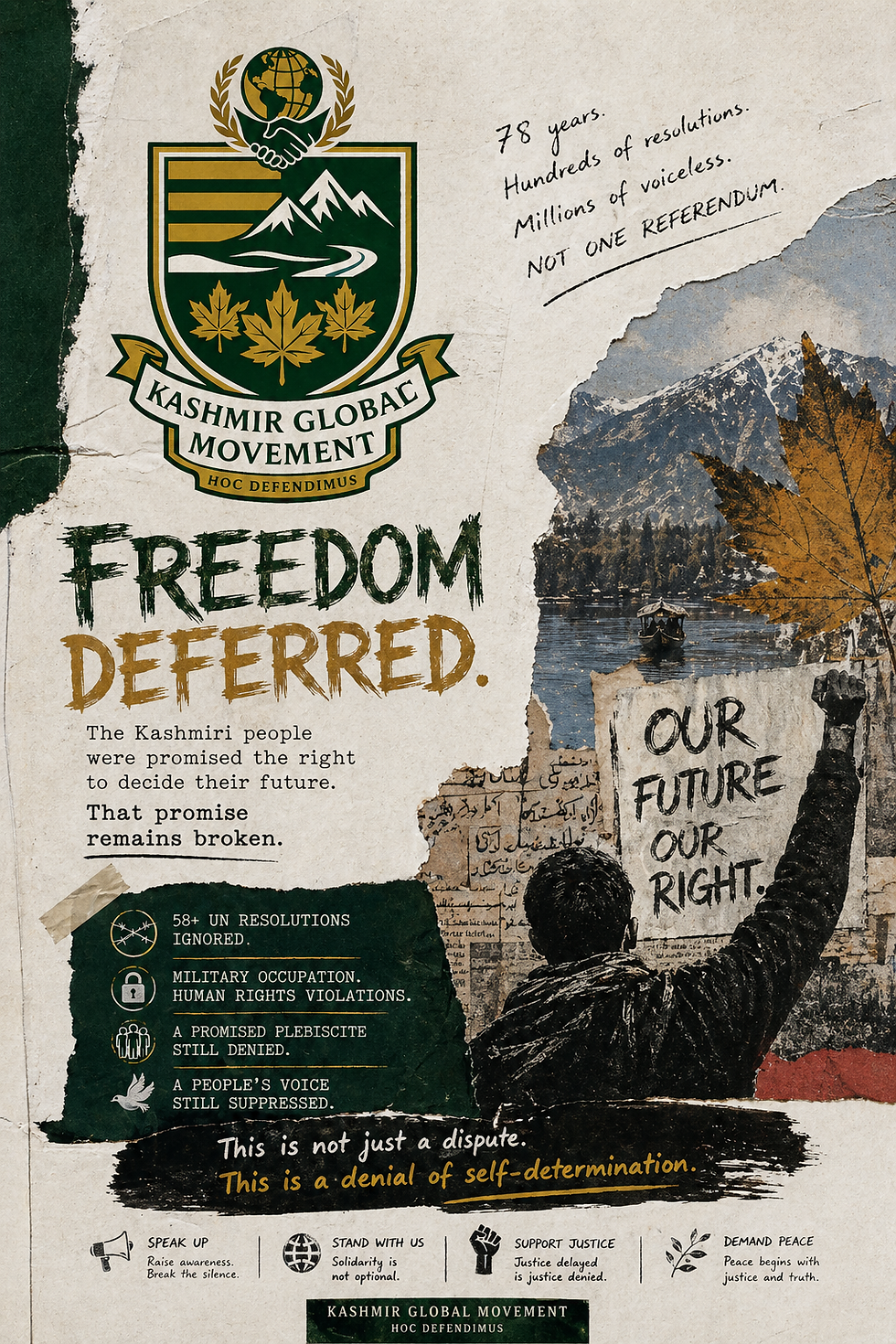
Kashmiris have been demanding their right to self-determination for decades, and India has tried its level best to silence the dissent. This persecution has now made a realization among the Kashmiris that India is not ready to even accept them as human. Consequently, they are reviving the armed resistance at both the individual and collective levels. The onus of instability all lies on the shoulders of the fascist Indian government.
Thus, the strategy of disproportionate punishment for the Muslims, particularly Kashmiris, fuels persistent hostility and reduces space for the peaceful resolution. Kashmiris under Indian occupation are subject to economic marginalization as well. The economy of IIOJK has lost over US$9 billion since the Indian Hindu nationalist government revoked its special status on August 5, 2019, causing a devastating impact on the livelihood of the local population. Moreover, the handicraft sector suffered a loss of around Rs 3,500 crore. The pencil industry, along with the Apple industry, also collapsed, leading to large-scale unemployment. Additionally, the per capita income of the residents of IIOJK is the lowest at 154,703 INR, which is even lower than the national average.
These issues are then followed by demographic engineering in IIOJK; the mix of problems creates an environment of relative deprivation for the people. This leads to a realization among the humans of IIOJK that even if they do not record their protest against the Indian occupation, they won't be tolerated. The constant targeting of Kashmiris by the Indian state apparatus resulted in further intensifying relative deprivation among the youth of Kashmir. These actions are not merely security actions but a systematic penalization of people under its illegal occupation. Resultantly, the only way out they consider is standing against the occupational forces for their basic human rights. This wave has seen a transformation where deprived literate youth of IIOJK are now involved in armed resistance against the Indian occupation.
Author: Abdul Basit is an Associate Research Officer at the Centre for International Strategic Studies AJK. He is a graduate in International Relations from National Defence University, Islamabad. He is also an alumnus of Near East South Asia, National Defence University, Washington D.C. His area of expertise include Indian Military Modernization and Indian Strategic Culture. He posts @AbdulBa34671597


Comments